AI Data Center EPC — Design, Procurement & Construction

Bringing the know-how of the Kagoshima 1GW project to your next data center.
Design, procurement and construction — one-stop support for building AI infrastructure.

Through the development of an AI data center cluster of up to 1GW in Satsumasendai, Kagoshima, we have accumulated hands-on expertise in site selection, substation design, liquid/air cooling and modular deployment. We have systematized this knowledge and now offer it end-to-end — from site due diligence through design, procurement, construction and operation — to companies and municipalities planning their own AI data centers.
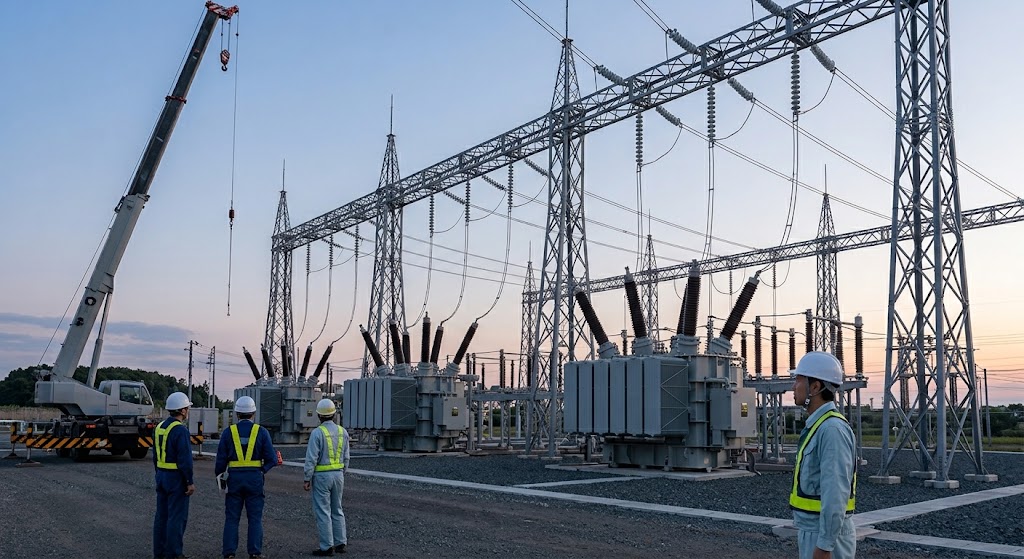
Hands-on experience at 1GW scale
Implementation know-how in site selection, substation design, liquid/air cooling and modular deployment, built on the Kagoshima 1GW project
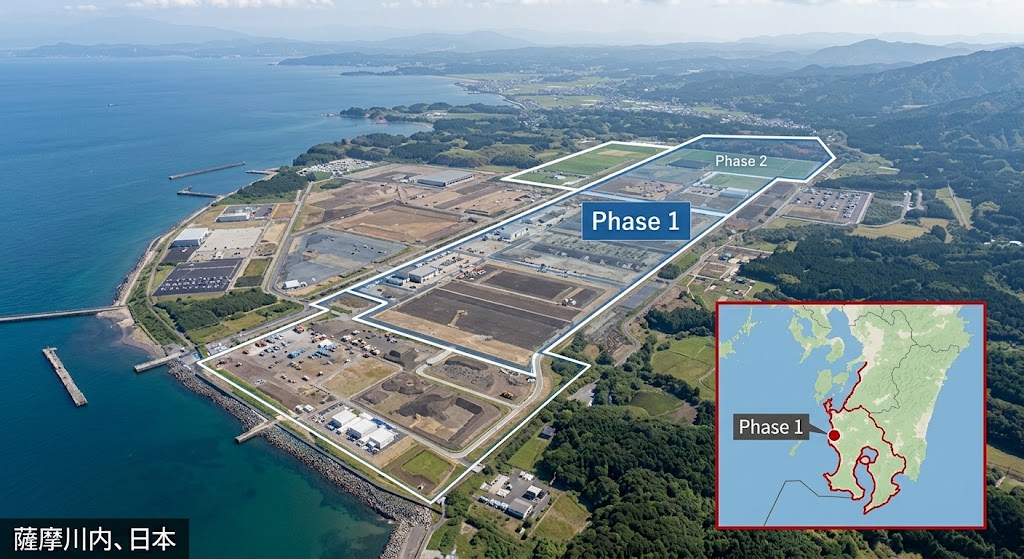
AI data center cluster concept of up to 1GW
Driving the Satsumasendai cluster concept: up to 1GW on approx. 37 ha
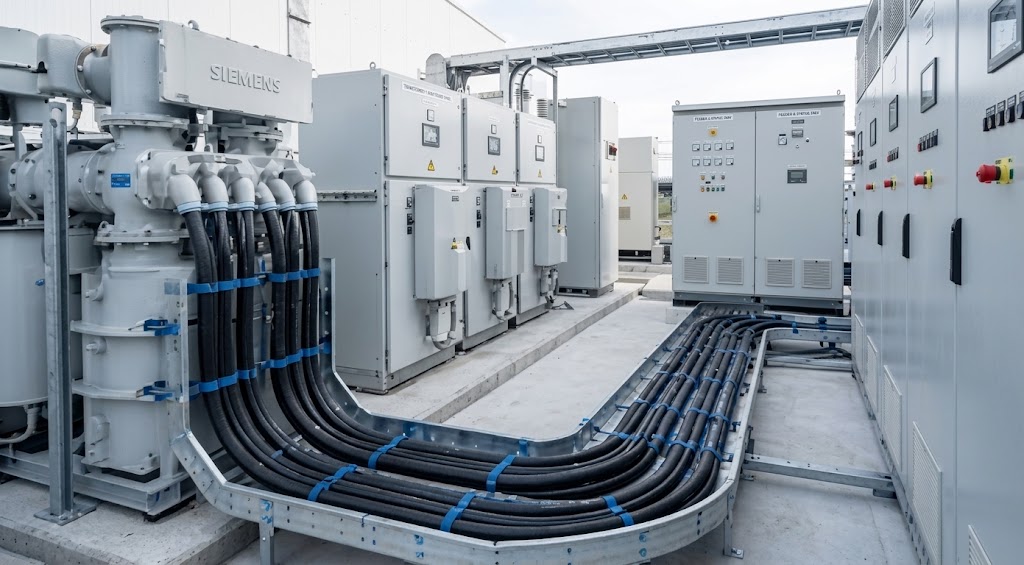
Substation expertise from building a 350MW substation
Extra-high-voltage substation expertise gained from building a 350MW substation
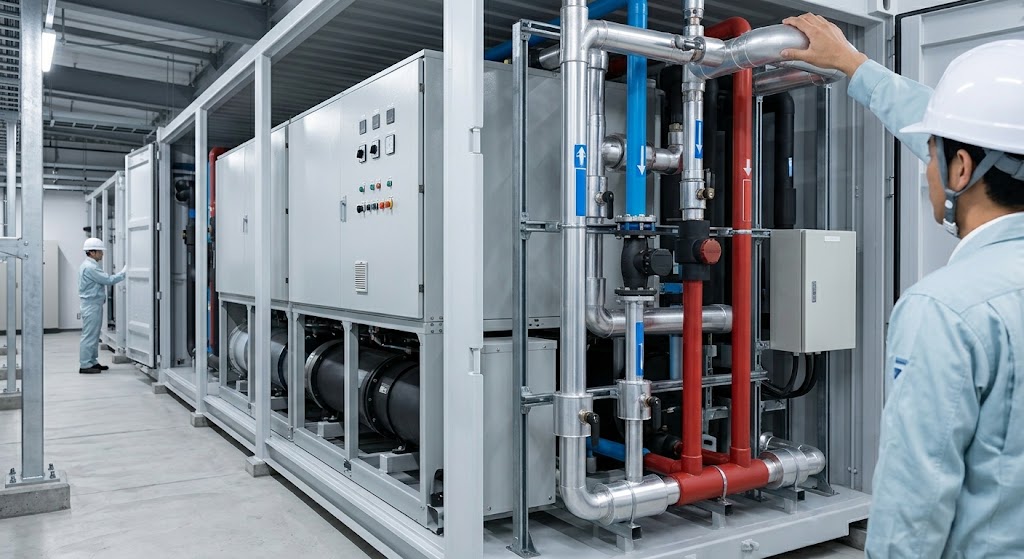
Implementation know-how in liquid cooling and modular deployment
Liquid cooling and modular deployment know-how proven on real projects
Through the development of an AI data center cluster of up to 1GW in Satsumasendai, Kagoshima, we have built practical expertise in site selection, substation design, liquid/air cooling and modular deployment. This is not a paper concept: it is know-how proven on real projects such as the completion of a 350MW substation and support for B200 server deployments in the Tokyo area, systematized and applied directly — from site due diligence through design, procurement, construction and operation — for clients planning new AI data centers.
Procurement power directly linked to the Taiwan supply chain
Direct collaboration with the Taiwanese partners that manufacture NVIDIA-designed AI servers. Procurement routes secured from B200/B300 through next-generation Vera Rubin
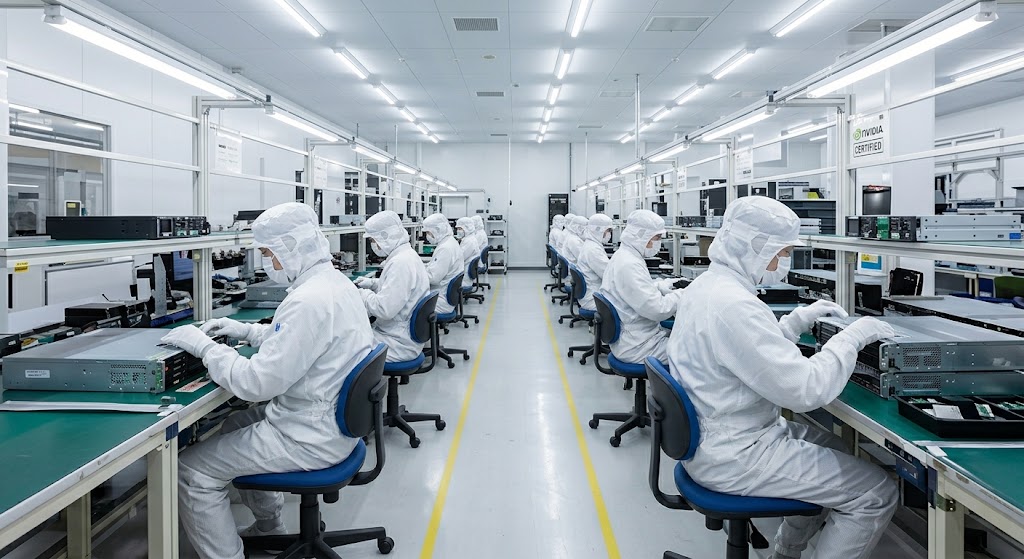
Direct collaboration with Taiwanese manufacturing partners
Directly connected to Wistron and other Taiwanese manufacturers of NVIDIA-designed servers
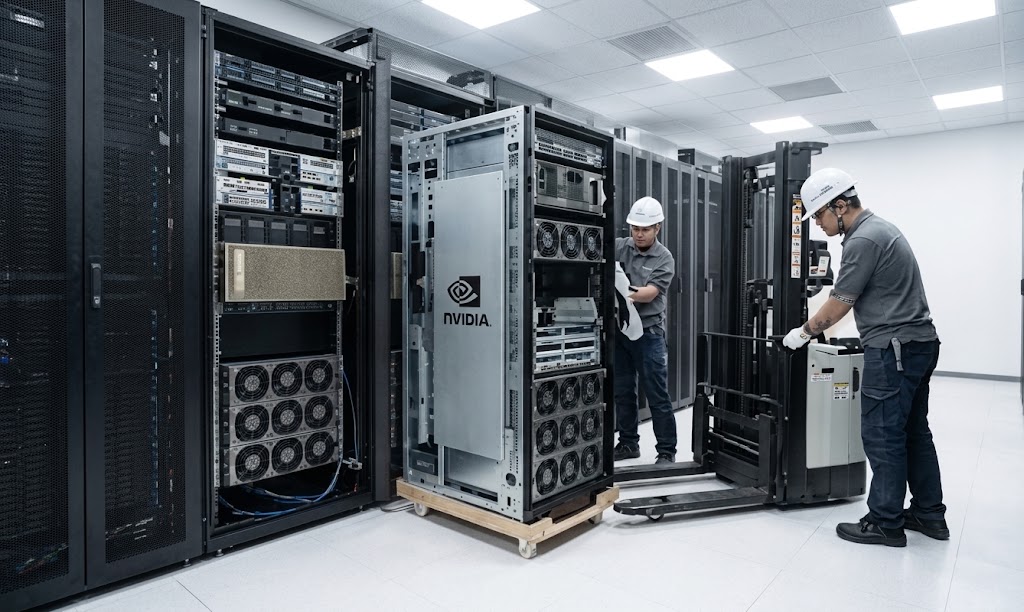
Track record handling Taiwan-built, NVIDIA-designed AI servers
Track record handling Taiwan-built, NVIDIA-designed AI data servers
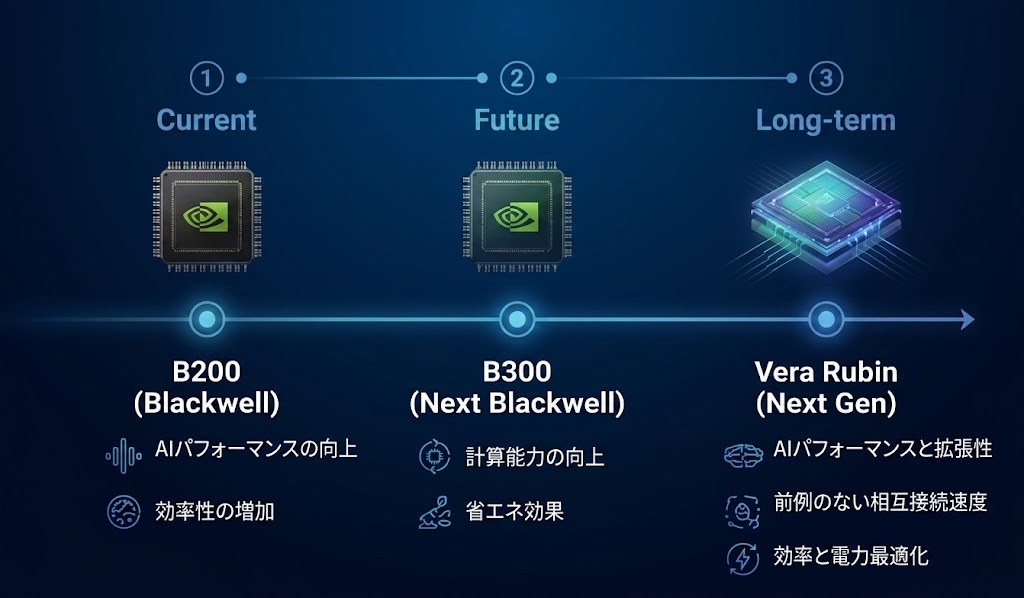
From B200 and B300 to Vera Rubin
B200 and B300 deployments planned; ready for next-generation Vera Rubin
NVIDIA-designed rack-scale AI servers are manufactured by Taiwanese partners such as Wistron. Through our Japan–Taiwan network we have secured procurement routes that connect directly to these manufacturers, and we have a track record handling Taiwan-built, NVIDIA-designed AI data servers. Beyond planned B200 and B300 deployments, we are prepared for continued procurement into the next-generation Vera Rubin era. With global GPU allocations remaining tight, the ability to put delivery dates on a plan is what determines the schedule and cost of building an AI data center.
Local construction network and one-stop accountability
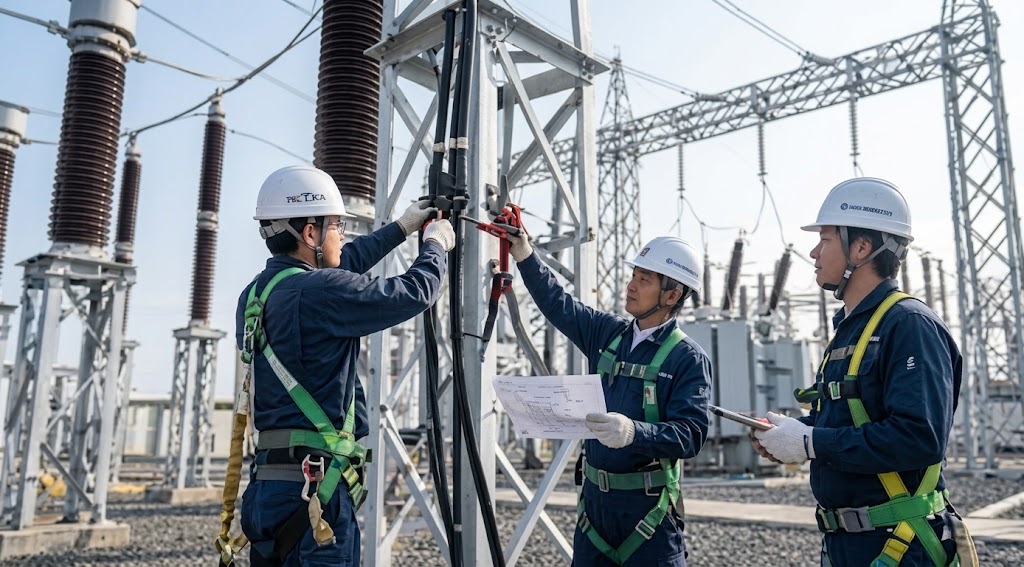
Construction by Kraftia and Seiko Electric of the Kyushu Electric Power group. Single-point responsibility from design, procurement and construction through operational handover
Construction at Kyushu Electric Power group quality
Utility-group-quality construction by Kraftia and Seiko Electric
Capability to build substation and distribution infrastructure
Substation and distribution construction from 220kV extra-high voltage down to 20kV medium voltage
Integrated management structure
End-to-end project management from design through operational handover
Construction is carried out by Kraftia and Seiko Electric of the Kyushu Electric Power group, who completed the 350MW substation, and is executed at utility-group quality — from extra-high-voltage power receiving through GPU server installation and commissioning. We eliminate the gaps in responsibility and specification mismatches that typically arise when design, procurement and construction are contracted separately, and deliver, under one-stop accountability, a facility that supports 82% server utilization and a PUE target of 1.2.
Project Roadmap
In progress
350
MW — Phase 1
Full-scale operation of a large AI data center
Expanding in stages from 350MW to bring a large-scale AI data center into full operation. Extra-high-voltage substations, battery storage and liquid/air cooling are deployed in earnest to handle large AI training and inference workloads. With a co-located Wistron AI server assembly plant and the port logistics of Sendai Port at its core, we build a regional supply chain that integrates everything from component procurement to installation.
Future concept
1,000
MW — Phase 2
1GW Cluster & Industrial Ecosystem
Expanding to a cluster of up to 1GW to establish a domestic AI foundation spanning LLM creation through the social implementation of Physical AI. Contributing to the competitiveness of precision manufacturing with RAG-based LLMs for IC design, while fostering domestic players across every field of AI data centers and forming an industrial ecosystem rooted in the region.
Scroll
VISION

Why Kagoshima,
why now.

Kagoshima Prefecture will attract clients implementing Physical AI to deploy AI demand, and on that basis build a GW-class data center cluster. Considering room for expansion, ripple effects across the prefecture, and investment in electricity, water and fiber-optic infrastructure from multiple angles, we aim to create demand within the prefecture and establish a model project for large-scale regional revitalization.

1GW
Maximum power capacity
approx. 37ha
Total site area
65%
Green power ratio
3 yrs
GPU refresh cycle
About Us

A company that designs, procures and builds
AI-ready data centers

We simplify the construction process and deploy GPUs and related facilities at your site by coordinating the optimal management team.
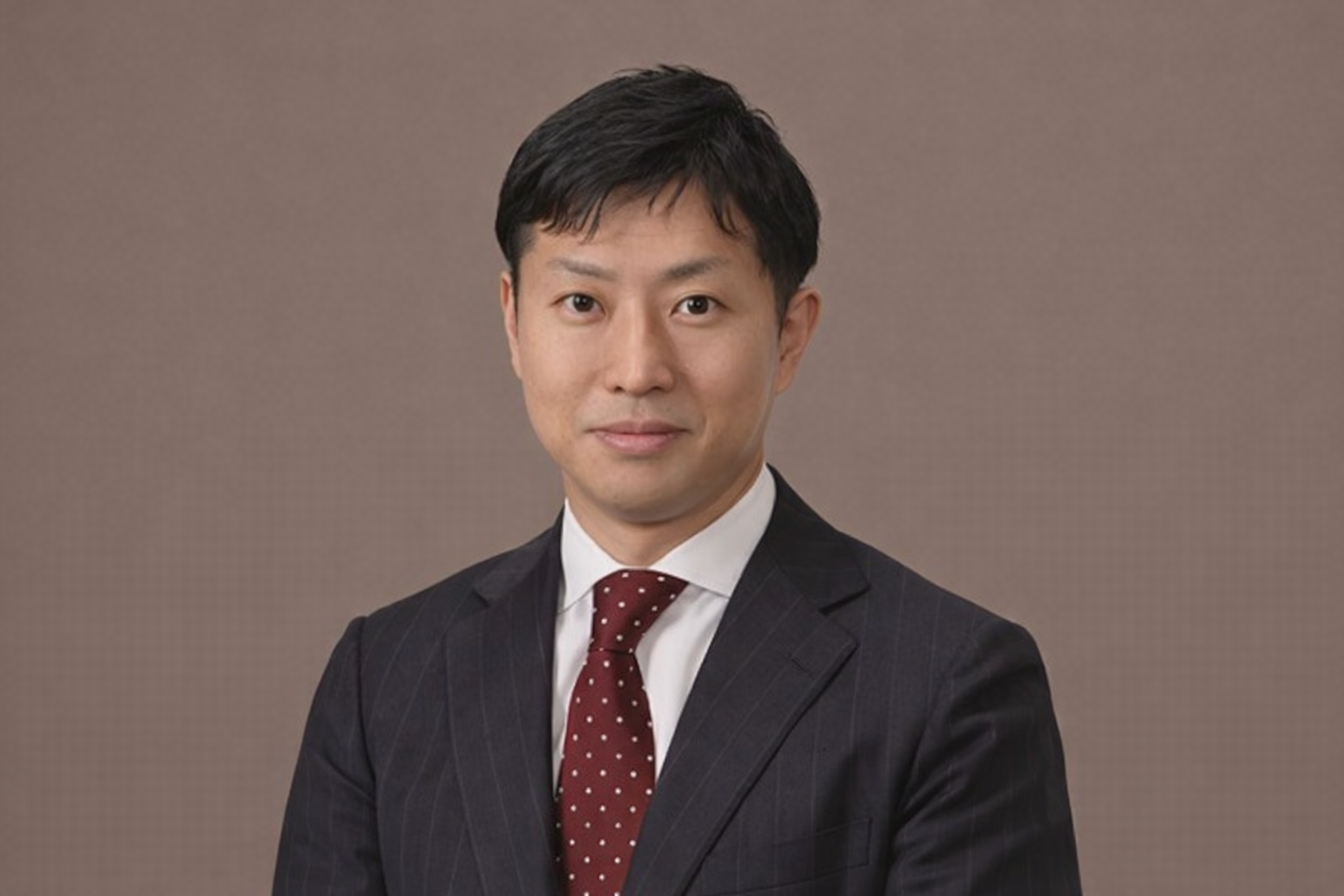
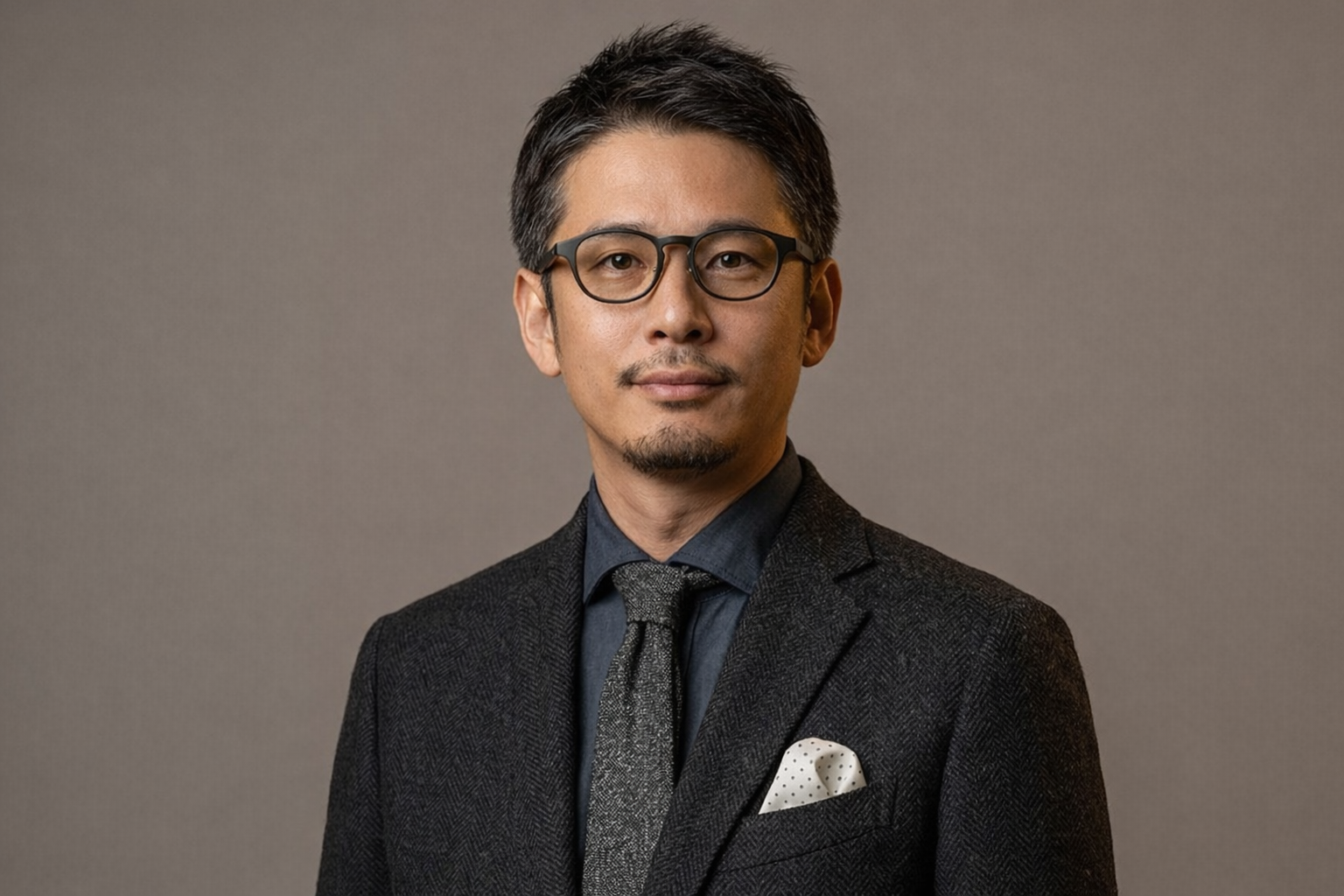
Kotaro Kosaka
Chairman
Kotaro Kosaka
Graduate of Keio University; Master's degree from Stanford University. Worked at CSIS and served as General Manager of Marketing & Sales at Mitsubishi Corporation. Japan representative of Taiwan's ITIC. Holds advanced technical and construction know-how for converting general-purpose data centers into AI-specialized facilities.
Goro Sasaka
President & CEO
Goro Sasaka
A serial entrepreneur who has established numerous businesses. Leads the growth strategy with outstanding expertise in data-storage-related businesses. Extensive experience in the design, procurement and deployment of advanced data center facilities.
Jason Hsiao
Chief Strategy Execution Officer
Chen-Yung Hsiao
Jason Hsiao
Angel investor in deep-tech startups. Responsible for advanced technology partnerships and building an international ecosystem. Drives the overseas expansion of AI infrastructure by leveraging a global network.
SERVICES

One-stop
EPC solutions

At every step of the EPC process we listen carefully to our corporate clients, collaborate closely, and deliver customized solutions that fully meet their needs.

Site due diligence
Site selection determines the success of a data center build. We conduct due diligence from every angle to ensure performance and sustainability.
Design & procurement
We define the target performance and scale of the facility, and draw up realistic, cost-effective plans based on budget and schedule.
Facility supply & deployment
Procurement and deployment of the diverse equipment an AI data center needs, at fair prices. Deployment know-how gained from supporting 5MW-class and 20MW B200 server rollouts in the Tokyo area.
Construction & installation
All construction is handled by Kraftia and Seiko Electric of the Kyushu Electric Power group. Utility-group-quality construction management, honed on a 350MW substation build, applied to AI data center construction.
Power receiving & distribution
Support for all high-voltage supplies at 6kV/20kV/220kV. Reliable substation infrastructure backed by our 350MW substation track record, plus stable power and water supply against the target PUE.
O&M (facility management)
Operation and monitoring with GPU resource management software. Periodic inspection and maintenance of all major equipment. Refresh support on a cycle of roughly three years.
EPC PROCESS

What you ask for, what you get.
The five-stage EPC process

What matters to the client is that the deliverables of each stage are clear. We define five stages from site due diligence to operational handover, and build GPU-generation decisions into each of them. Because rack power, cooling method, floor loading and substation capacity are all determined by the GPU generation, running GPU procurement and EPC as one integrated process is the single biggest lever for cutting schedule and cost.

STEP 01
Site due diligence
Deliverable
DD report (available power capacity, grid interconnection, water rights, floor loading)
At this stage we fix whether to plan up to the B300 generation or to look ahead to Vera Rubin (configurations up to ~370kW per rack).
STEP 02
Design
Deliverable
Basic design documents, liquid-cooling system design, substation plan
The GB300 generation rejects roughly 90% of its heat through liquid cooling. System design accounts for W45-class coolant and flow rates of up to ~177 L/min per rack.
STEP 03
Procurement
Deliverable
Procurement list and delivery schedule
Allocation of NVIDIA-designed servers secured through our direct Taiwan route. When allocations are tight, simply holding a procurement slot is what drives the schedule.
STEP 04
Construction
Deliverable
Construction plan and quality records
Modular deployment shortens the on-site schedule. Construction management at Kyushu Electric Power group quality.
STEP 05
Operational handover
Deliverable
As-built documentation, acceptance testing (including GPU cluster burn-in), operations manual
Handover includes the EMS and GPU resource management that support the 82% utilization and PUE 1.2 targets on the operational side.
Typical risks when GPU procurement and EPC are contracted separately
Power shortfall — rack power and substation capacity fall short of a GPU generation chosen later.
Cooling mismatch — servers that require liquid cooling arrive at a facility designed for air cooling.
Schedule misalignment — facility completion and GPU delivery fail to line up, leaving investment idle.
NEXT-GEN GPU PLATFORMS

Design and build capability
for the latest GPU platforms

We have a track record handling Taiwan-built, NVIDIA-designed AI data servers, with B200 and B300 deployments planned and next-generation Vera Rubin support in preparation. Vera Rubin is manufactured by the Taiwanese supply chain including Wistron, so our direct Taiwan procurement network becomes our procurement power for the next generation. For every platform, we can design and build in either liquid- or air-cooled configurations.

Blackwell Ultra
NVIDIA B300
Deployment design and construction for servers with HGX B300.
LiquidSupports DLC (direct liquid cooling) configurations. Consolidation into high-density racks maximizes space and power efficiency.
AirDeployment design for existing air-cooled data centers is also supported, enabling a phased shift to AI that makes use of current facilities.
Grace Blackwell Ultra
NVIDIA GB300
Deployment design and construction for rack-scale configurations such as NVL72.
LiquidHigh-density 100kW-class racks cooled with DLC. Facility-side infrastructure, including CDUs and coolant loops, designed as one system.
AirHybrid air/liquid configurations are also supported, optimized to the facility conditions and target PUE.
Next Generation
NVIDIA Vera Rubin
Facility design anticipating deployment of the next-generation Rubin platform.
LiquidLiquid-cooling infrastructure designed ahead for even higher density, so the facility can keep pace with the roughly three-year GPU refresh cycle.
AirHeadroom built into HVAC and airflow design for flexible response to future generation changes and reconfiguration.
Facility requirements by GPU generation — quick reference for clients
Item B200 generationGB200 NVL72 B300 generationGB300 NVL72 Next generationVera Rubin NVL72
GPU configuration72× Blackwell72× Blackwell Ultra72× Rubin + 36× Vera CPU
Rack power (approx.)approx. 120–132kWapprox. 132–142kW (peak approx. 155kW)approx. 120–130kW (NVL144 CPX configuration approx. 370kW)
CoolingLiquid cooling required (DLC)Liquid cooling required (approx. 90% of heat rejected via liquid)Liquid cooling required
Memory (per rack)HBM3e approx. 13.4TBHBM3e approx. 20TBHBM4 approx. 20.7TB
Floor loading (approx.)approx. 1.5t per rackapprox. 1,580kg per rack (over ≒2,200kg/m²)Equal or greater assumed
Supply statusMass-produced, deployed generationCurrent mainstream generationVolume production and shipments start in 2026; allocations tight through 2027

* Figures are reference values based on public information as of August 2026. The design assumptions differ fundamentally from conventional data centers (5–10kW per rack, air-cooled). Once the GPU generation is fixed, the facility requirements are fixed — which is exactly why placing GPU procurement and EPC as one order cuts schedule and cost.

Design
NVIDIA
Manufacturing
Wistron and other
Taiwanese manufacturing partners
Procurement & EPC
SSI (us)
Construction
Kraftia / Seiko Electric
(Kyushu Electric Power group quality)
Construction of small modular data centers
Container-type and prefabricated modular data centers can be built on short schedules. Supporting small configurations from several hundred kW to several MW, we enable AI infrastructure — PoCs, edge sites, regionally distributed deployments — without relying on large facilities. Liquid or air cooling can be selected for modular configurations as well.
FACILITY & POWER ENGINEERING

Facility engineering that designs
power and cooling

The competitiveness of an AI data center is decided by the power and cooling infrastructure that keeps its GPUs running reliably. We design and build everything from substations to cooling and power management as one system, achieving both high utilization and high efficiency.

Server Utilization
82%
High server utilization
Stable power and cooling infrastructure plus operational optimization with GPU resource management software deliver 82% server utilization. Idle time is minimized so the computing power of your GPU investment is fully realized.
Cooling Efficiency
PUE 1.2
Power efficiency targeted with liquid cooling
A liquid cooling system centered on DLC (direct liquid cooling) is deployed, with the facility's overall power efficiency designed toward a PUE of 1.2. Power consumed by cooling is reduced and redirected to computing.
Substation & Distribution
220kV → 20kV
Substation and distribution from extra-high to medium voltage
We design and build the substation and distribution systems ourselves, from 220kV extra-high-voltage receiving down to 20kV medium-voltage distribution. Power infrastructure engineering capable of GW-class AI data centers, backed by our track record building a 350MW substation.
Integrated control with an Energy Management System (EMS)
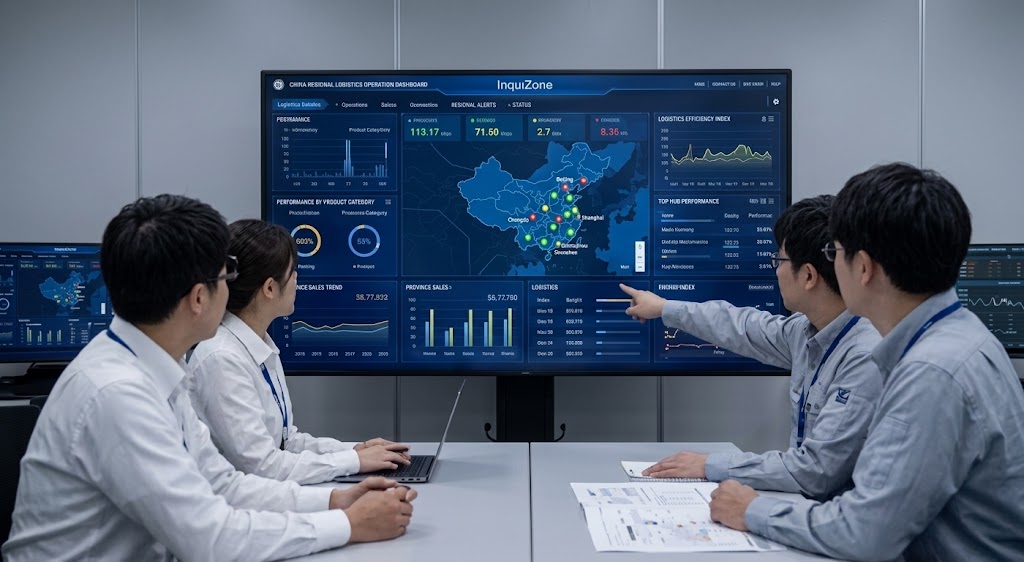
We build a power management system that monitors everything from receiving, transformation and distribution to IT load and cooling equipment as one, and tracks the steep load swings characteristic of AI workloads. Power-quality maintenance, demand control and coordination with battery storage support achievement of the utilization and PUE targets on the operational side.
TRACK RECORD

Proven construction capability,
demonstrated by results

Through Taiwanese manufacturing partners such as Wistron, we handle NVIDIA-designed AI data servers (GB200/GB300 NVL72 class) end-to-end — from procurement through installation, power connection and commissioning. AI servers exceeding 120kW per rack cannot be accommodated by the design conventions of traditional data centers. A track record with real hardware is what underwrites a facility that will actually run. All construction is carried out by Kraftia and Seiko Electric of the Kyushu Electric Power group.


POWER INFRASTRUCTURE
350MW
Substation construction
Actual completion of a 350MW substation. The execution capability to build the extra-high-voltage substation at the heart of a GW-class AI data center under utility-group-quality construction management.
TOKYO — AI SERVER DEPLOYMENT
5MW class
B200 server deployment support (Tokyo area)
Supported a 5MW-class B200 server deployment in the Tokyo area. Field capability to stand up AI infrastructure reliably even under the power and space constraints unique to urban sites.
Server generation deployed: Taiwan-built, NVIDIA-designed B200 (Blackwell)
TOKYO — AI SERVER DEPLOYMENT
20MW
B200 server deployment support (Tokyo area)
Supported a 20MW NVIDIA B200 server deployment in the Tokyo area. Accumulated large-scale deployment expertise spanning power connection, cooling and installation of high-density GPU racks.
Server generation deployed: Taiwan-built, NVIDIA-designed B200 (Blackwell)
FLAGSHIP — Satsumasendai, Kagoshima AI Data Center Cluster
Up to 1GW concept / approx. 37ha / 350MW in Phase 1
NVIDIA-designed rack-scale servers of the B200 and B300 generations are planned for the initial block. Power and cooling designs compatible with next-generation Vera Rubin are implemented ahead of time — a flagship project that keeps building GW-class AI data center implementation expertise.
CONSTRUCTION PARTNERS
Kraftia (Kyushu Electric Power group)
Kraftia
(Kyushu Electric Power group)
Seiko Electric
Seiko Electric

Construction is handled not by a team with plans on paper, but by one that has actually built substations and deployed AI servers. A structure that can manage everything from power infrastructure construction through IT equipment deployment and commissioning as one is the foundation for executing AI data center EPC with certainty.

PROJECT

Satsumasendai AI Data Center
Cluster Concept

PHASE 1 — PROOF OF CONCEPT
10MW proof-of-concept phase
Container/IDC-type modular deployment, liquid-cooling verification, establishment of the operations base
PHASE 2 & 3 — FULL SCALE
350MW → 1GW expansion
Co-located Wistron AI manufacturing site, supply chain concentration, creation of domestic players
CONSTRUCTION
REQUEST

Construction Request

Inquiries about the design, procurement and construction of data centers

Purpose of request:
HEADQUARTERS
Daiichi Nan-oh Building 6F
2-21-2 Nishi-Shimbashi, Minato-ku
Tokyo 105-0003, Japan
SSI (c/o Anchor Star)